
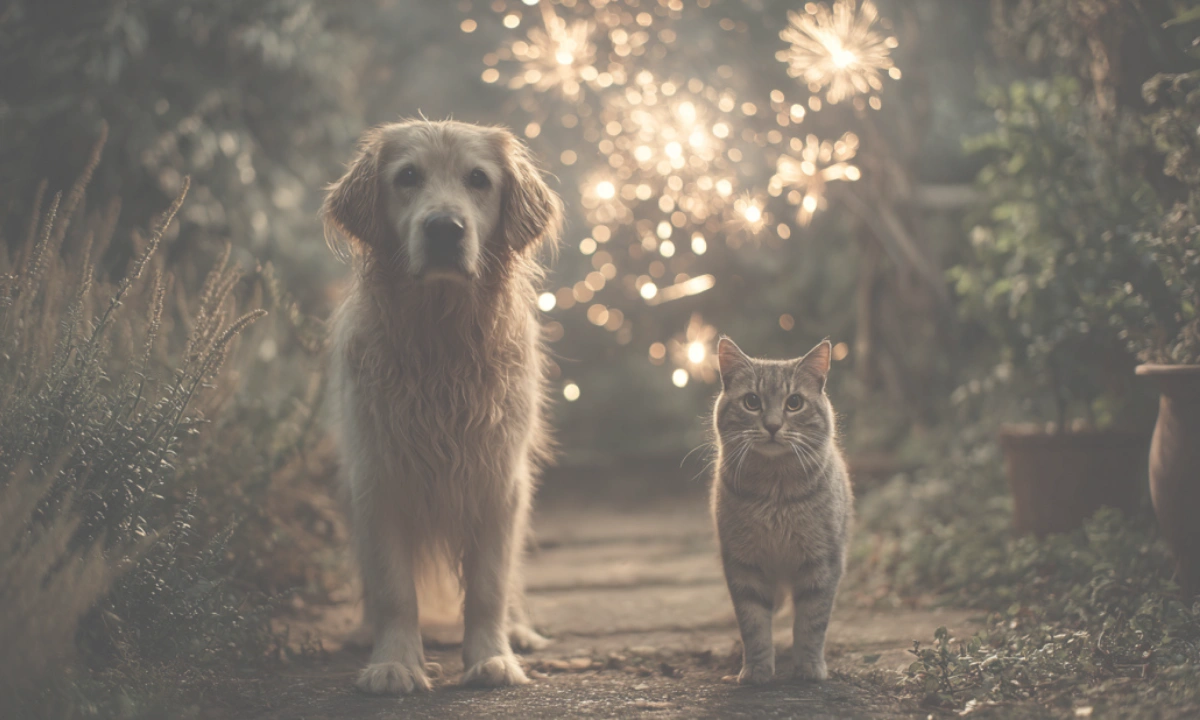
Fireworks may be a highlight of the holiday season for us, but for pets (especially those already sensitive to noise), they can be deeply unsettling. The sudden bangs, bright flashes, and unpredictable bursts of activity can be a stressful experience for both pets and their owners.
We understand how challenging this time of year can be. You’re not alone, and your pet isn’t “overreacting.” Their sensory world is simply far more intense than ours.
But with the right preparation and a few supportive strategies, you can help your dog or cat feel safer and more settled, even when fireworks are in full swing.
This guide walks you through what to expect, how to prepare, and what to do during and after fireworks to keep your pet as calm and comfortable as possible. And if you ever need extra help, our caring team at Dolittles is always here to support you and your furry friend with pet boarding during the holidays.
In this article…
Why Do Fireworks Trigger Anxiety in Pets?
Sudden loud noises and unpredictable flashes
Fireworks are startling for pets because they happen without warning. The sudden booms and bright flashes disorient your pet.
- Unlike us, our pets don’t understand the cause of the noise.
- They simply react to what feels like a potential threat.
This instinctive response is why many dogs and cats become frightened long before the display reaches its peak.
Heightened senses in dogs and cats
Pets experience fireworks far more intensely than we do.
- Dogs can hear frequencies up to four times higher than us.
- Cats have considerably more sensitive hearing than dogs.
Bright, unpredictable flashes can also feel overwhelming, especially in low-light environments where pets are trying to rest. This heightened sensory input means even a “small” firework can feel huge and impossible to escape from.
It’s no wonder anxiety for pets can escalate so quickly.
Common anxiety signs owners should look for
We see a wide range of reactions in pets during fireworks season. Recognising early signs of anxiety can help you respond quickly and calmly.
Look for behaviours such as:
- Shaking or trembling
- Pacing or restlessness
- Clinginess or following you closely
- Refusing food or ignoring usual commands
- Excessive vocalisation (whining, barking, meowing)
- Hiding under beds, behind furniture, or in enclosed spaces
These cues are your pet’s way of saying they’re overwhelmed. Understanding them is the first step toward helping your dog or cat feel more secure during stressful moments.
How to Prepare Your Pet Before Fireworks Begin
Create a Calm, Predictable Routine Leading Up to the Event
Before fireworks begin, a steady routine helps your pet feel grounded. If the fireworks conflict with your normal routine, we recommend:
- Exercising your pet earlier
- Serving dinner a little earlier than usual
- Ensuring they’re safely indoors well before the noise starts
You can introduce this earlier routine up to a week before the scheduled fireworks display. A predictable rhythm helps dogs and cats feel secure, reducing the likelihood of heightened stress once the fireworks blast off.
Set Up a “Safe Space” With Familiar Bedding and Comfort Items
A dedicated safe retreat can make a world of difference for noise-sensitive pets. Choose a quiet room inside your home and set it up with their favourite blanket, bed, or toys.
Closing blinds or curtains will block the flashes, while adding a cosy crate or creating a covered nook makes a protected space where your pet can retreat when they feel overwhelmed. Familiar scents and textures tell them, “This is my spot, and I’m safe here.”
Use Sound Desensitisation and Training if Time Allows
If you have a few days or weeks before a known fireworks event, gentle sound desensitisation can help your pet cope more confidently.
- Play firework sounds at very low volume
- Pair the noise with treats, play, or gentle praise
Gradually increase the volume as they adjust (always at a pace that keeps them relaxed). This type of training won’t eliminate fear, but it can soften the intensity of their reaction on the night.
Speak With Your Vet if Your Pet Has Severe Anxiety
Some dogs and cats experience significant distress during fireworks, and professional support can make a big difference. Speak with your vet if your pet has a history of panic, escape attempts, or extreme fear.
Your vet may recommend anti-anxiety medication, calming supplements, pheromone diffusers, or other tailored strategies. Planning this early ensures you have the right support in place long before fireworks begin.
What to Do During Fireworks to Keep Your Pet Calm
Keep pets indoors with closed windows and curtains
Once fireworks begin, the safest place for your pet is indoors. Closing windows, doors, and curtains helps soften loud bangs and blocks out flashes of light that can startle sensitive animals.
This also prevents frightened pets from bolting outside in a panic, which is one of the most common risks during fireworks season. At Dolittles, we always prioritise secure indoor environments because they give pets a sense of containment and safety.
Distract with enrichment activities or background noise
Keeping your pet’s mind busy can significantly reduce the intensity of their anxiety. Offer enrichment activities such as:
- Puzzle feeders
- Lick mats
- Long-lasting treats
This encourages calm focus.
Soft background noise (gentle music, rainfall tracks, a familiar TV show) can help mask sudden sounds outside. These small distractions often provide a comforting sense of normalcy until the fireworks fade.
Stay calm (your energy influences your pet)
Pets take emotional cues from the people they trust most. If you remain calm and relaxed, your pet is far more likely to feel secure.
- Speak softly and move slowly while offering reassurance.
- Try not to fuss or overreact to their behaviour.
We know that a calm presence is often one of the simplest and most effective ways to support anxious pets.
Avoid punishing anxious behaviour
Anxiety is not misbehaviour but a fear response. Punishing trembling, hiding, whining, or pacing will only heighten your pet’s stress and may damage their trust in you.
Instead, offer understanding and let them express their discomfort safely. Gentle reassurance and access to their safe space will help them cope far better than correction or pressure to “be brave.”
After the Fireworks: Helping Your Pet Recover
Give Them Time to Decompress in Their Safe Space
Once the noise has passed, many pets remain on high alert. Allow yours to retreat to their designated safe space, whether that’s a crate, a cosy corner, or their favourite bed tucked away in a quiet room.
Keep the environment calm and predictable, and let your pet choose when they’re ready to re-engage with the household. A slow return to routine helps their nervous system settle naturally.
Reinforce Positive Behaviour and Provide Comfort
As your pet starts to emerge, offer gentle reassurance. Soft pats and a calm voice signal that everything is back to normal.
Encourage steady, relaxed behaviour by guiding them through routine activities like a slow walk, drinking water, or a gentle play session. This helps shift their focus away from the earlier stress.
Look for Lingering Anxiety Signs and Plan Ahead
Some dogs and cats may stay unsettled long after the fireworks stop. Watch for ongoing signs like:
- Hiding
- Pacing
- Trembling
- Clinginess
- Disrupted sleep
- Reduced appetite
If symptoms persist, it’s worth chatting with your vet.
We encourage you to plan for fireworks early so that each year becomes a little easier and less overwhelming for your pets.
How Dolittles Supports Pets During Fireworks Season
Calm, Experienced Carers Who Understand Noise Anxiety
At Dolittles, we work with pets who experience noise sensitivities every year. We understand how overwhelming fireworks season can feel for both pets and their owners.
Our carers are trained to recognise early signs of anxiety and respond with gentle, reassuring support.
Whether your pet needs…
- Quiet company
- Space to settle
- Calming guidance
…our team adjusts the approach to suit your pet’s emotional needs.
Quiet, Secure Accommodation Designed for Comfort
Our boarding spaces are purpose-built to help minimise stress. Pets stay in safe, secure accommodation away from outdoor noise, with cosy resting areas that help them feel protected.
We reduce external stimuli where possible, with:
- Low lighting
- Soft bedding
- Calm environment
Individualised Care Plans for Anxious Dogs and Cats
Every pet experiences anxiety differently, which is why we tailor their care plan to match their personality and comfort requirements.
- Some pets benefit from extra one-on-one time
- Others from familiar comfort items
- Some require vet-approved medication or calming aids
We follow your instructions precisely and keep their routine steady – from feeding and rest times to preferred comfort habits.
If fireworks disrupt your pets, we recommend considering a pet retreat like Dolittles (even if it’s only for one night). They can have a quiet and calm holiday with our expert carers this fireworks season.
Conclusion
Most pets find fireworks season overwhelming, but with the right preparation and calm support, they truly can get through it feeling safe and understood. Creating predictable routines, offering a comforting retreat, and staying steady during the noise helps your pet build confidence one step at a time.
At Dolittles, we know how deeply you care about your furry family members. We’re here this fireworks season if your pet needs a calming retreat.
If your pet needs a quieter environment, extra reassurance, or the gentle guidance of experienced carers, our team is ready to help them feel secure and settled.
Contact our friendly team today to learn more about our services and how we’ll take great care of your pets this fireworks season.
Managing Pet Anxiety During Fireworks FAQ
How can I tell if my pet is becoming anxious during fireworks?
Many dogs and cats show subtle signs of stress long before fireworks reach their peak. You might notice your pet pacing, trembling, hiding in small spaces, or clinging more than usual. Some pets become unusually vocal, while others go quiet and withdrawn. These behaviours are your pet’s way of saying they feel overwhelmed, and they’re all completely normal reactions. If you see any of these signs, it’s best to stay calm, guide them to their safe space, and reassure them with your presence.
What can I do to help my pet feel calmer before fireworks start?
Before the fireworks begin, you can make a big difference by giving your pet a calm, predictable lead-up to the evening. We recommend a bit of early exercise, an earlier dinner, and settling them safely indoors before any loud noises begin if the fireworks conflict with your normal routine. Setting up a cosy “safe space” with familiar bedding, comfort items, or even a crate covered with a light blanket can help them feel protected. If your pet is already noise-sensitive, gentle desensitisation (such as low-volume firework sounds paired with treats) may also help if you have time to prepare. Chat with your vet if your pet struggles with severe anxiety, as they may recommend medication or pheromone sprays for calming.
What can I do during fireworks to help keep my pet calm?
During fireworks, keeping your pet indoors is the most effective first step. Close windows and blinds to reduce noise and block out sudden flashes. Provide gentle distractions such as puzzle toys, chew treats, soft music, or the TV to shift your pet’s focus away from the sounds outside. Most importantly, stay calm yourself. Pets look to you for cues, so your steady, relaxed presence helps them feel safe. Avoid punishing anxious behaviour, as this can increase fear. Instead, offer quiet reassurance and allow them to retreat to their safe space when needed.
How can I help my pet recover after fireworks?
After the fireworks end, give your pet plenty of time to decompress in their safe space without extra stimulation. A calm, predictable environment helps them settle. Once they’re ready, offer gentle pats, water, and quiet companionship to reinforce that they’re safe. Over the next day, watch for lingering signs such as clinginess, pacing, or changes in appetite. If anxiety persists, speak with your vet.
How does Dolittles support anxious pets during fireworks season or other loud events?
At Dolittles, we take noise anxiety seriously, and our approach is built around calm, consistent, personalised care. Our experienced carers understand the subtle signs of stress in dogs and cats, and we gently guide each pet through the settling process at their own pace. We provide quiet, secure accommodation designed to soften outside noise, along with cosy bedding and familiar comfort items to help pets feel grounded. Every pet receives an individualised care plan, which may include routine reinforcement, soothing activities, or support with medication provided by their vet. Throughout their stay, we keep open communication with owners, offering regular updates so you always know your pet is safe and cared for.

Share this article